
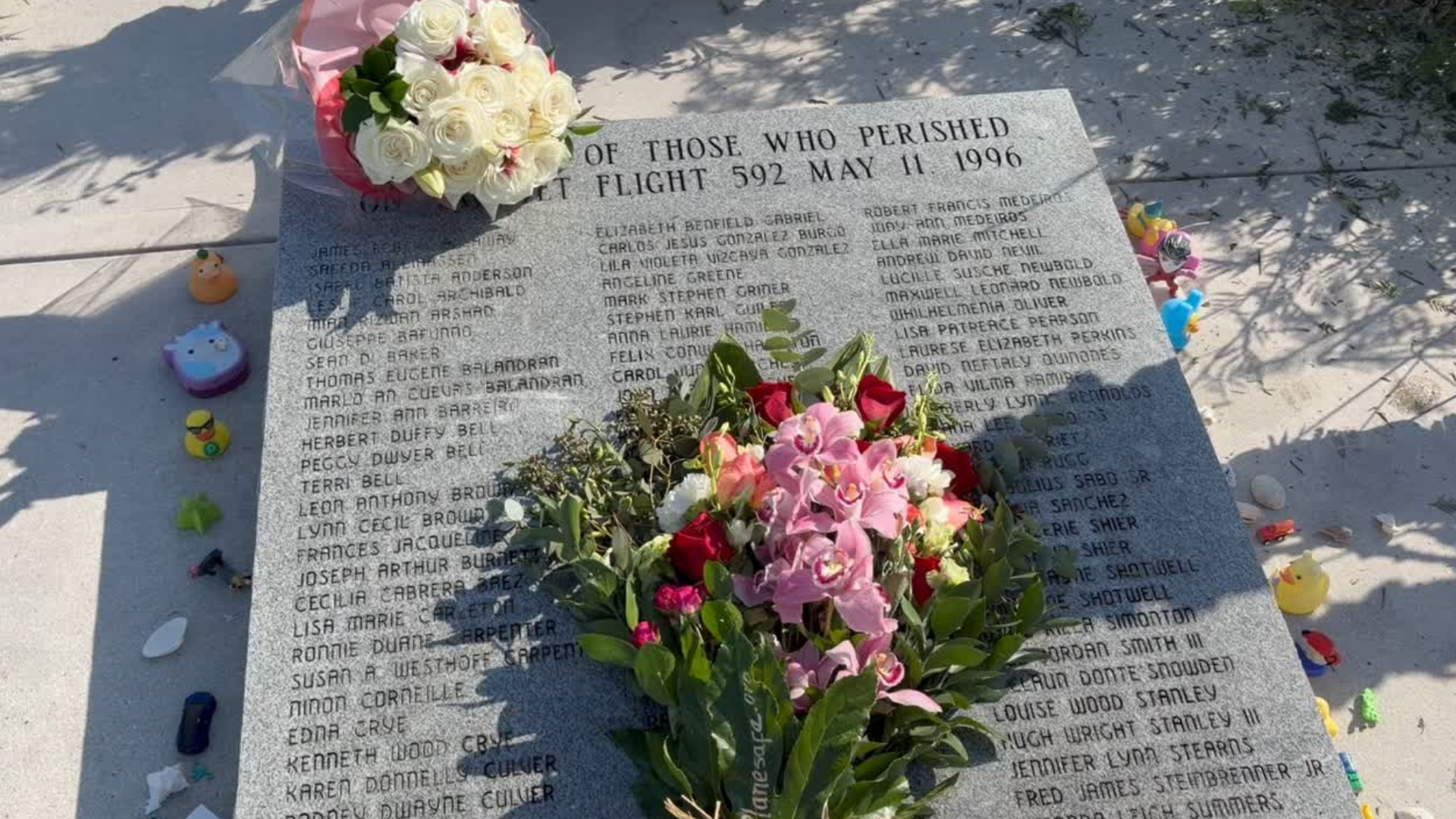
Thirty years ago, on the afternoon of May 11, 1996, a Douglas DC-9-32 crashed into the Florida Everglades about 10 minutes after takeoff. The plane was headed from Miami International Airport to Hartsfield-Jackson Atlanta International Airport.
The ValuJet Flight 592 crash remains the deadliest aviation disaster in Florida history. Podhurst Orseck represented many of the families of the victims.
Managing Partner Steven Marks served as Lead Counsel for both the state court plaintiffs and as a member of the Plaintiffs’ Steering Committee in the federal multi-district litigation.
“I was a relatively young lawyer to have this kind of responsibility, and I had never seen the kind of tragedy and emotions that families experienced so up-close prior to that time in my career. It was incredibly difficult because it was a prolonged recovery process and many of the families never got bodies returned to them so they couldn’t have traditional services. There was a lot of emptiness and anger,” recalls Steven Marks, aviation attorney at Podhurst Orseck.
It remains the first and only U.S. aviation disaster to result in a criminal conviction of a company for its role in the crash.
“When we were taking depositions of various maintenance personnel it became clear to me that SabreTech, the maintenance company responsible for putting these hazardous materials on the aircraft, had actually violated some criminal statutes by falsely certifying that the materials were not hazardous,” said Marks.
According to the Federal Aviation Administration, the crash was caused by an uncontrolled fire which started in the airplane’s forward cargo compartment.
The National Transportation Safety Board determined the fire was initiated by the actuation of one or more chemical oxygen generators which were being improperly carried as cargo.
“They basically put little bombs on the aircraft without safety caps on these heavy pressurized oxygen canisters. The safety caps were 39 cents apiece. They marked them non-hazmat when they were hazardous materials. You can’t have hazmat materials on passenger aircraft,” said Marks.
Since the forward cargo compartment was not equipped with a fire detection system, the first indication of a problem came too late.
After the crash, new regulations were instituted requiring the incorporation of fire detection and fire suppression systems in existing and future cargo compartments.
“The ValuJet incident really put pressure on the regulators to do a more aggressive job on the oversight of operators and maintenance facilities and that trend continued,” said Marks.
SabreTech was found guilty of mishandling hazardous materials and was fined $2 million and ordered to pay $9 million in restitution, however, on appeal the final sentence was a $500,000 fine and three years’ probation.
Three SabreTech employees were charged, but two were acquitted of all conspiracy charges. Mechanic Mauro Valenzuela-Reyes fled before the trial began and was indicted on contempt of court charges. He remains a fugitive to this day.
The civil cases resulted in substantial recoveries for the families. Families of the victims, many represented by Podhurst Orseck, received more than $260 million in insurance settlements in total.
“Many people on this plane were not traveling alone for business. There were many families on this aircraft. There were people who lost generations, like one of our clients who lost his entire family in the tragedy,” recalls Marks. “This was beyond devastating and it should have never happened.”
